Products
Primers
A primer does two things at an interface: it wets a surface the next layer cannot wet on its own, and it presents a chemistry the next layer can bond to.
Home › Products › Functional Coatings › Primers
Functional Coatings
Adhesion is an interface problem, not a layer problem
Adhesion between two layers fails for one of two reasons. Either the upper layer never properly wet the lower one, so the real area of contact is a fraction of what the eye sees, or the two surfaces are in contact but have no chemistry in common. A primer is the layer that fixes both. It is chosen to wet a surface the next layer cannot wet by itself, and its dried film presents groups that the next layer can hydrogen bond to, react with or interdiffuse into. It is an adapter between two chemistries. It is not glue.
The cases we are asked for are specific. Metallised paper and metallised PET carry a vacuum-deposited aluminium layer, often with a thin lacquer over it and a release layer under it. Inks and coatings printed straight onto that surface frequently key to a weak boundary layer and lift on a tape test. An in-line water-based primer gives them something that holds. Conventional sheet-fed offset ink dries by oxidation over hours, and a UV coating applied over a fresh ink film cures against a surface that is still moving and still carrying mobile oil and wax. The result is poor interfacial adhesion, cracking on the crease and blocking in the pile. A primer seals the print and presents a fixed surface. Films that were corona treated at the extruder may sit below their original treatment level by the time they reach the press, or may have slip additive back at the surface. A primer lays down a new surface instead of trying to oxidise the old one again.
Three practical points decide whether it works. Coat weight is low. The primer is an interface, not a build layer, and too much of it simply becomes the weakest part of the stack. The primer must dry or cure fully before the next station, because a primer still holding water or solvent is a release layer, not an adhesion layer. And the pairing matters more than either layer on its own. A primer is specified with the ink or coating it will carry, and the meaningful test is the whole stack on the actual substrate, not the primer measured by itself.
Our water-based primers are the UniPrimer and Unimer ranges, applied in line through a sheet-fed offset coating unit. UniPrimer are the general-purpose in-line grades — one for sealing conventional offset ink before a UV coating, one for board. Unimer are the premium grades for the harder interfaces: a wax-free grade where inter-coat adhesion to a UV coating is the problem, and a metallised-PET grade. All are acrylic emulsions at around 40 % solids that form a film physically, by evaporation of the water and coalescence of the dispersed particles. They are alkaline, so the inks beneath them have to be alkali-resistant. Every grade carries a Technical Data Sheet, a Safety Data Sheet and a Regulatory Summary. This page sits under functional coatings, which is the overview of the three functional families.
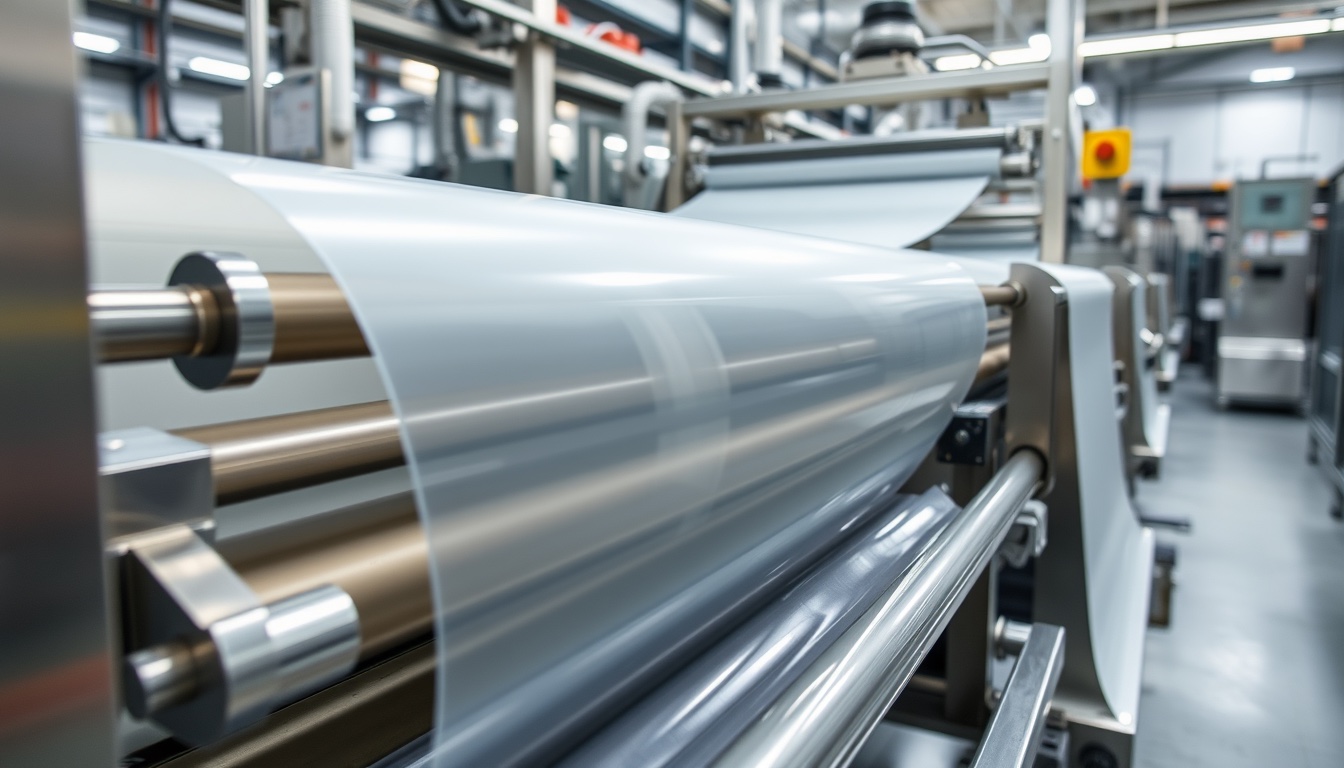
Primer grades
The water-based grades below are already documented with a full Technical Data Sheet, Safety Data Sheet and Regulatory Summary. UniPrimer are the general-purpose in-line grades; Unimer are the premium grades for the harder interfaces. The remaining entries are supplied to the case, and the grade designation is confirmed against the job.
UniPrimer 1301
Water-based primer applied in line over conventional sheet-fed offset ink. It seals the print and provides the interfacial adhesion a subsequent UV coating needs. Soft and flexible, formulated to hold blocking resistance in the pile. 1.0–1.8 g/m² dry, 40 ± 5 s Ford B4 at 25 °C.
UniPrimer 1310
Board primer. Seals absorbent and coated board before UV coating, so the coating sits on the surface instead of being drawn into the fibre and losing weight where it is wanted. 1.0–1.8 g/m² dry on coated board, up to 2.5 g/m² on uncoated.
Unimer 1140
Premium low-VOC, wax-free aqueous primer for inter-coat adhesion with UV coatings under difficult conditions — coalescent and amine below 3 % w/w. Wax-free because surface wax is the usual reason a UV coat fails to key. 1.0–1.5 g/m² dry, 40 ± 5 s Ford B4 at 25 °C. A legacy designation being folded into the UniPrimer 13xx block; until it is, it is the wax-free premium grade and nothing else on the page carries that duty. Specified with a matched UV coating rather than on its own.
Unimer 1240
Met-PET primer, for metallised PET board where UV inks and coatings will not hold on the metallised surface. Faster drying than the general-purpose grades and better tolerance of isopropanol. 1.2–2.0 g/m² dry, 40 ± 5 s Ford B4 at 25 °C. A legacy designation being folded into the UniPrimer 13xx block; it is the metallised-board grade for sheet-fed work, as 1320MP is for metallised paper on web.
UniPrimer 1320MP
Metallised paper primer, water-based acrylic-PUD hybrid, applied in line so that the inks and coatings above key to the primer rather than to the transfer or release layer under the metal. 0.8–1.5 g/m² dry, 35–40 % w/w solids, 30 ± 5 s Ford B4 at 25 °C. Checked wet after 24 h at 40 °C and 90 % RH, which is where a weak boundary layer shows first.
UniPrimer 1324MPU
UV LED in-line primer for metallised paper and metallised board on narrow web, 385–405 nm, TPO-free, 1.0–2.0 g/m². For lines with no drying capacity to give a water-based primer, and for jobs going straight into a UV coating at the next station.
UniPrimer 1340FP
Film primer, water-based polyurethane dispersion, for corona-treated PE, PP, BOPP, PET and nylon, and for metallised BOPP and PET, where corona alone is not enough or treatment has decayed between the extruder and the press. 0.3–0.8 g/m² dry from a 200–250 l/cm cylinder at 2–4 cm³/m²; supplied at 15–25 % w/w solids, 18–25 s Ford B4 at 25 °C, and diluted further in line. Minimum 38 mN/m at the station, measured on the reel.
UniPrimer 1345FU
UV LED in-line film primer for metallised PET and BOPP and for low-energy films, almost 100 % solids acrylate, TPO-free, curing at 385–405 nm from the substrate up. 1.0–2.0 g/m² — the stated exception to the 1.0 g/m² ceiling on film, because a crosslinked layer does not become the weak plane the way a coalesced dispersion film does. 150 ± 50 mPa·s at 25 °C and 100 s⁻¹ on a rotational viscometer, not a cup. For film lines that cannot dry a water-based primer at their running speed.
UniPrimer 1348AC
Polyethyleneimine anchor coat for extrusion coating and extrusion lamination, applied from dilute solution at 0.05–0.2 g/m² dry. Not a film-forming primer: it presents a reactive surface for the molten polymer to graft to. 20 kg pack only.
UniPrimer 1360LM
Low-migration water-based primer for food-contact stacks running to Regulation (EC) 1935/2004, where the primer sits under a low-migration ink or coating. Raw materials selected under the EuPIA Charter, coalescent and amine below 1 % w/w. 1.0–1.8 g/m² dry. Conformity is assessed on the pack, on request.
UniPrimer 1365LU
Low-migration UV LED primer for food and pharmaceutical packaging, 385–405 nm, TPO-free, with polymeric and multifunctional acylphosphine photoinitiators and polymeric amine synergists; ITX and benzophenone excluded. 1.0–2.0 g/m². Conformity is assessed on the pack, on request.
Product data
| Process | Sheet-fed offset in-line coating unit, wet-on-wet and wet-on-dry. Flexo and gravure primer stations on web. In line on metallising and coating lines. |
|---|---|
| Chemistry — water-based | Acrylic emulsion, styrene-acrylic and pure acrylic, for the sheet-fed board grades. Polyurethane dispersion and acrylic-PUD hybrid for film and metallised film, where the primer has to elongate with the web and still resist blocking in the reel. Where wet rub or water resistance is needed, a polycarbodiimide crosslinker at 2–4 % w/w on the primer with a pot life of 8–12 h at 30 °C; aziridine is not used, on toxicological grounds. |
| Chemistry — other than water-based acrylic emulsion | Polyethyleneimine anchor coat at 0.05–0.2 g/m² dry from a dilute solution, for extrusion coating and extrusion lamination, where molten polymer needs a reactive surface rather than a film to key into. UV LED acrylate primer, almost 100 % solids, TPO-free, curing at 385–405 nm by radical polymerisation, with polymeric and multifunctional acylphosphine initiators. Solvent-based polyurethane primer for film lines that cannot dry a water-based primer at their running speed, supplied only where the line already has the extraction and the area classification for a flammable liquid. |
| Solids and viscosity | Sheet-fed water-based grades 38–42 % w/w solids at 40 ± 5 s, Ford Cup B4 at 25 °C. Film primers 15–25 % w/w at 18–25 s, Ford Cup B4 at 25 °C, and diluted further in line. UV LED primer 100 % solids at 150 ± 50 mPa·s, cone-and-plate rotational viscometer to ISO 3219 at 25 °C and 100 s⁻¹ — a UV primer is measured on a viscometer, not in a cup, and a cup figure for it should be treated as an error. Ford B4 is the cup for every primer in the house and is the cup the /functional-coatings/ page quotes for these same grades; the seal lacquers and barrier coatings on that page are quoted on DIN 4, which is a different cup for a different family and is not interchangeable with it. One product, one cup, named with every number. |
| pH | 8.0 ± 0.5 for the water-based grades, ammonia-buffered. The inks under an aqueous primer must be alkali-resistant; a reflex blue or a rhodamine that is not will shift under it, and the shift appears in the pile rather than on the press. |
| Coat weight — sheet-fed, under a UV coating | UniPrimer 1301 and 1310: 1.0–1.8 g/m² dry on coated board, up to 2.5 g/m² on uncoated or absorbent board, which is 2.5–6 g/m² wet at supply solids. Chambered anilox 140–180 l/cm at 6–9 cm³/m². Unimer 1140: 1.0–1.5 g/m². Unimer 1240 on metallised PET board: 1.2–2.0 g/m². |
| Coat weight — web and film | UniPrimer 1320MP on metallised paper: 0.8–1.5 g/m² dry. UniPrimer 1340FP on treated and metallised film: 0.3–0.8 g/m² dry, from a 200–250 l/cm gravure cylinder at 2–4 cm³/m². UniPrimer 1345FU UV LED primer: 1.0–2.0 g/m², the 100 % solids exception explained in the row below. UniPrimer 1348AC polyethyleneimine anchor coat: 0.05–0.2 g/m². The range across the page is therefore 0.05–2.5 g/m² dry, and the per-grade figure is the specification — a single 0.3–2.0 g/m² chip excludes two grades on this page. Verified by weighing a cut area before and after coating, on the running reel and not on a drawdown. |
| Coat weight — why it is low | The primer is an interface, not a build layer. For the coalescing water-based grades, above roughly 2.5 g/m² dry on board and 1.0 g/m² on film the primer itself becomes the weakest plane in the stack, and the cross-hatch failure moves out of the ink-to-substrate interface and into the primer. If more weight appears to be needed, the answer is almost always a different chemistry rather than a heavier coat. The 100 % solids UV LED primers — 1345FU, 1324MPU and 1365LU — are the stated exception at 1.0–2.0 g/m² on film: they crosslink into a continuous network instead of coalescing from a dispersion, so the cured layer keeps its cohesive strength at a weight where a dispersion film would not. They are still run at the bottom of that range wherever adhesion allows. |
| Drying in line | On a sheet-fed press the sheet is tack-free within 1–3 s in the coater’s infrared and hot-air section at 8,000–12,000 sheets per hour, and block resistance in the pile develops over the following 15–30 min. On a web at 150–300 m/min the tunnel needs 1.5–3 s of dwell at 60–80 °C air, with the chill roll bringing the web below 35 °C before the rewind. These are the press figures. A through-dry of an unassisted drawdown at 23 °C takes 25–35 s; that is a laboratory observation and must never be printed as press dwell, which is what the 25–35 s figure on the live page is doing. |
| Cure — UV LED primer | 385–405 nm, 8–12 W/cm² peak irradiance measured at the substrate plane rather than at the emitting window, 60–120 mJ/cm² measured in band with a radiometer calibrated for 385–405 nm — a UV-A 320–390 nm head is calibrated below most of the array and under-reports it. Cures from the substrate up, so anchorage is made first and the surface last; the surface is oxygen-inhibited and is the one to check with a solvent rub, not the adhesion side. Medium-pressure mercury alternative at 120–200 W/cm, read on a UV-A 320–390 nm head, which cures from the surface down. TPO-free. |
| Adhesion — how it is judged | Cross-hatch to ISO 2409 at 1 mm spacing on board, and a straight tape pull with 3M 610 or equivalent on film, where a blade would cut the substrate rather than the coating. Tested 24 h after the run and again after 7 days at 40 °C. Primed metallised stock is also checked wet, after 24 h at 40 °C and 90 % RH, because a weak boundary layer under the metal declares itself with moisture long before it does dry. |
| Substrates | Coated paper and board, uncoated and absorbent board, metallised board, metallised paper, metallised PET, and corona-treated PE, PP, BOPP, PET and nylon film. Surface energy at the primer station: 38 mN/m minimum by test inks to ISO 8296, measured on the reel that is about to run and not taken from the film certificate, because corona decays between the extruder and the press. Adhesion on synthetic and non-absorbent substrates is confirmed by trial. |
| Food-contact work | UniPrimer 1360LM and UniPrimer 1365LU are built from raw materials selected under the EuPIA Charter for stacks running to Regulation (EC) 1935/2004, where the primer sits under a low-migration ink or coating. The UV grade is TPO-free, with polymeric and multifunctional acylphosphine photoinitiators and polymeric amine synergists; ITX and benzophenone are excluded. Where Regulation (EU) 10/2011 and the Swiss Ordinance lists are cited, they are substance-selection references only: 10/2011 governs plastic food-contact materials rather than printing inks and coatings, and citing it is not a declaration of compliance. Conformity of a finished pack rests on an assessment of that pack; migration and food-contact conformity are assessed on the pack, on request. |
| Volatile organic content | Water-based grades: coalescent and amine together below 3 % w/w on the supplied primer, and below 1 % on the low-migration grades. That is the figure to publish and the figure the compliance chip carries — “VOC: coalescent and amine below 3 % w/w”. “VOC below 10 % w/w” is not a low-VOC claim for an aqueous primer and is not used on this page. |
| Pack sizes | 20 kg HDPE jerrycan, 50 kg and 200 kg HDPE drum for the water-based grades. 1000 kg IBC where a coating line runs the same primer continuously. UV LED primer in 5 kg and 20 kg HDPE pails and 200 kg drums. UniPrimer 1348AC polyethyleneimine anchor coat in 20 kg only, since it is applied at very low solids and a larger pack outlives its usefulness on any realistic line. |
| Storage and shelf life | Water-based grades at 5–35 °C, frost-free, containers closed, out of direct sun, stirred before use. Do not freeze: a frozen dispersion coagulates and does not recover on thawing. Shelf life 6 months from manufacture in the unopened original container. Crosslinker 6 months sealed, and once it is added the primer is used inside its pot life and not returned to stock. UV LED primer 6 months at 15–25 °C in the dark, in the original container with its air headspace intact — dissolved oxygen is what keeps a UV material stable in the can. |
| Documentation | Technical Data Sheet, Safety Data Sheet and Regulatory Summary for every grade. |
Compliance and standards
- Raw materials selected to the EuPIA Charter
- REACH-registered raw materials
- APEO-free raw materials
- Heavy-metal-free pigments
- Water-based, VOC below 10 % w/w
- Migration assessed on the finished pack, on request
- TDS, SDS and Regulatory Summary for every grade
White paper
Surface energy, corona decay, and why a primer is more stable than more treatment
A liquid spreads on a solid only when the solid’s surface energy exceeds the liquid’s surface tension by a working margin. The rule of thumb in converting is a minimum of about 38 mN/m for water-based and UV chemistry on film, and more than that for demanding work. Untreated polyolefin sits around 30 to 31 mN/m. Corona treatment raises it by oxidising the top few nanometres of the surface and introducing polar groups.
That treatment decays. The oxidised chain ends reorient into the bulk, slip and antiblock additives migrate back to the surface, and warm storage accelerates both. A film treated to 42 mN/m at the extruder can read well below that after weeks in the warehouse, and the loss is not uniform across the web or through the roll. Re-treating in line helps, but it is working against the same physics and against whatever has already bloomed to the surface.
A primer changes the problem rather than fighting it. Instead of modifying the existing surface and hoping it holds, the primer puts down a new surface of known chemistry. What the next layer sees is the primer, and the primer does not decay in the roll the way a treated surface does. The film still has to be clean and wettable enough for the primer to lay down evenly, so in practice a primer supplements treatment rather than replacing it.
Metallised substrates are a different case again. The printable surface is not the polymer or the paper. It is aluminium a few tens of nanometres thick, usually with a thin protective lacquer, and in transfer-metallised paper it sits over a release layer that was designed to let go. Aluminium oxidises within moments of deposition, and that oxide is easy to wet but offers few sites to bond to. Ink that looks well anchored may be holding a boundary layer that itself gives way, which is why the failure typically shows as metal lifting with the ink rather than ink lifting off metal.
White paper
UV coating over conventional offset ink
Conventional sheet-fed offset ink dries by oxidative polymerisation. The distillate and part of the oil are absorbed into the sheet within seconds, which sets the print enough to handle, but the crosslinking itself runs for hours and continues for days. The film is still developing when the sheet reaches the coater or comes round for a second pass.
A UV coating is almost 100 % solids and cures in a fraction of a second. Two things then work against the interface. The coating has had almost no time to wet the ink and interdiffuse with it before it is locked solid, and the polymerisation shrinks the coating, which puts the new bond under stress immediately. With mercury lamps the cure runs from the surface downwards, so the layer nearest the ink is the last to reach full strength.
The ink surface is also not clean in the chemical sense. Wax, drier and unreacted oil sit at the surface of a fresh oxidative film, and some of it is still mobile. That mobile layer is exactly the boundary the UV coating has to hold onto. The result is the familiar set of symptoms: a coating that passes a tape test on the flat and fails on the crease, a matt patch where the ink film was heaviest, and blocking in the pile.
The primer resolves this by sealing the print. It stops the residual oil and wax at the interface, it dries to a fixed surface within the press run, and its chemistry is chosen for the acrylate coating that follows. Blocking improves for the same reason: the sheets in the pile are separated by a dry primer film rather than by an ink film that is still giving up material.
Two constraints apply. Aqueous primers are alkaline, around pH 8, so the inks beneath them must be alkali-resistant. Not all conventional inks are, and it is worth confirming that with the ink supplier before the run rather than after. The primer must also be dry before the UV station. A UV coat cured over a primer that is still holding water gives a cohesive failure inside the primer, and often a hazy or mottled finish that no amount of extra lamp power will correct.
Don't see what you're looking for?
Please feel free to call us. We colour-match to any request and develop inks around your press-room need.

Science Technology Innovation & Application. Printing inks and coatings for packaging, label and graphic printing since 2006.
Contact Us
E105, GNEPIP, Industrial Area Site-5,
Greater Noida, Uttar Pradesh 201306, India
+91-8750051884
sales@ufindustries.com
https://ufindustries.com