Products
Functional Coatings
Coatings specified by a measurable function rather than a finish: a seal, a barrier, or adhesion where there was none.
Coatings that do a job
Specified by a function, not by appearance
A gloss varnish is judged by looking at it. The coatings on this page are not. A heat-seal lacquer is judged by a load in grams per 15 mm on a tensile tester, and by how the seal fails. A barrier coating is judged by a Cobb value, a kit rating, a water-vapour transmission rate or an oxygen transmission rate. A primer is judged by whether the layer above it survives a cross-hatch and a tape pull after ageing. In each case the specification is a number, a test method and a stated set of conditions. Appearance is a constraint on these coatings, not the point of them. This page is the overview; each family has its own page, and the grade-level detail belongs there.
The second thing the three families share is the reason they are bought. Each one removes a material or a process step. A heat-seal lacquer replaces a sealant layer: the seal is coated onto one web instead of being laminated to it, so a two-ply structure does the work of three. A barrier coating aims to replace a polyethylene extrusion: the coated paper is designed to hold out grease and water, to carry a water-vapour barrier and, in a layered structure, an oxygen barrier, and to stay repulpable, which a PE-coated composite is not. Each of those is a number against a test method, and for these grades the numbers are still being established — see the product data below. A primer removes a rejected run. It lets an ink or a coating go onto a surface that would otherwise refuse it, so the substrate does not have to change and the job does not need a second pass.
Each of these coatings has to be right twice. It has to run on the coating machine — viscosity at the gravure or flexo station, coat weight held across the web, drying complete before the chill roll, no blocking in the finished reel — and it has to perform weeks later, in another factory, under a sealing jaw, on a filling line or in a pulper. The two sets of conditions pull against each other. A lacquer that seals at a lower jaw temperature sits closer to blocking in a warehouse. A barrier coating heavy enough to bridge the fibre peaks is harder to dry and stiffer at the crease. Most of the formulation work in functional coatings goes into that gap rather than into the headline number.
These coatings sit on or next to the food-contact face, so raw-material selection follows the EuPIA Charter and its exclusion list, and food-packaging grades are formulated against Regulation (EC) 1935/2004, Regulation (EU) 10/2011 for its substance lists, the Swiss Ordinance, the BfR recommendations and, where a customer requires it, the Nestlé Guidance. UV primers are TPO-free; ITX and benzophenone are excluded from food-contact grades. Recyclability is a design intention rather than a certificate: the design-for-recycling criteria under the EU Packaging and Packaging Waste Regulation arrive through delegated acts that are not yet in force, so these structures are designed for recycling and repulping and the supporting values are measured per grade. Every grade ships with a Technical Data Sheet, a Safety Data Sheet and a Regulatory Summary. Grade-level figures for these three families are still being finalised, and the product data table below marks what remains to be confirmed.
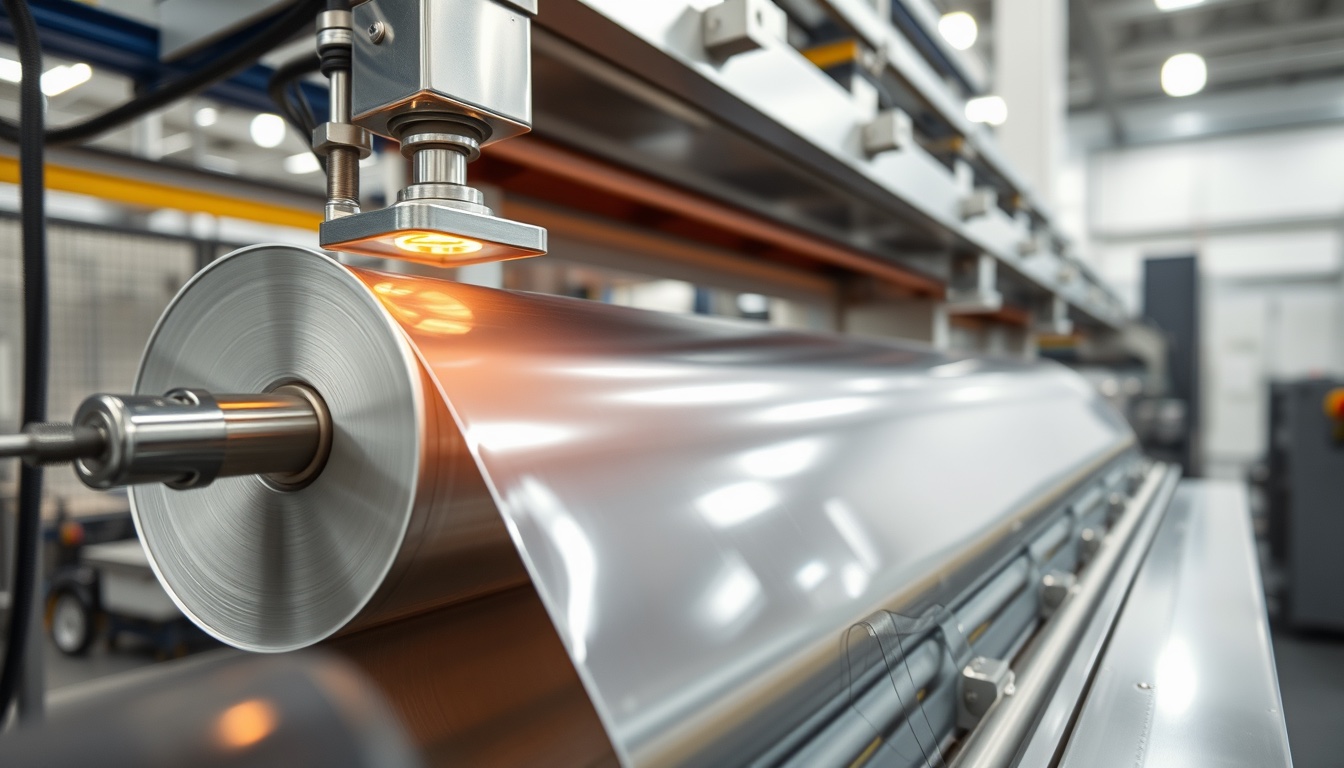
The three families
Three functions, eight sub-ranges. Each family has its own page with the process detail: heat-seal lacquers, barrier coatings and primers.
UniSeal-510PS
Peelable heat-seal lacquer for foil and film lidding over polystyrene and polypropylene cups and trays. Initiates at 130 °C on PS and 150 °C on PP, 0.5 s at 0.2 N/mm²; 350–900 g/15 mm to ASTM F88. Interfacial peel at constant load, no stringing, no flange residue. 3–4 g/m² dry.
UniSeal-515PT
Peelable heat-seal lacquer for APET and CPET trays. Initiates at 170 °C, window 180–210 °C, 600–1200 g/15 mm. 3–4 g/m² dry.
UniSeal-530LK
Lock-seal lacquer for fin and four-side seals on paper-aluminium laminate, including pan masala and mouth-freshener pouches. Initiates at 120 °C; typically 1500–2500 g/15 mm on the stated construction at 0.5 s and 0.2 N/mm², failing by substrate tear, against a design floor of 1200 g/15 mm. Typically retains 60 % or more of the clean-seal load with 10 mg of product dust in the seal area. 4–6 g/m² dry. Confirmed on the customer’s laminate and filling machine.
UniSeal-545LT
Low seal initiation and cold-set lacquer. Initiates at 90–100 °C, 500–1000 g/15 mm, 3–5 g/m² dry. Blocking margin is the trade-off: 40 °C rather than the 50 °C of the standard grades, so it is specified with a reel-storage condition.
UniBar-610GW
Grease and water barrier coating for paper and board. Kit 9–11 at 6–8 g/m² and 11–12 at 10–12 g/m² in two passes; Cobb60 8–15 g/m². For foodservice board, wraps, bags and cartons, at a fraction of an extrusion coat weight and repulpable with the fibre.
UniBar-625MB
Moisture barrier top coat. At 8–12 g/m² in two passes, Cobb60 3–8 g/m² and WVTR 10–30 g/m²·24 h at 38 °C and 90 % RH on the stated board — one coat weight for all three results. Also the hydrophobic layer that protects the oxygen coat below it. Figures belong to the construction and are confirmed on the customer’s base.
UniBar-630OB
Oxygen barrier base coat, polyvinyl-alcohol based, supplied at 12–18 % solids. Below 1 cm³/m²·24 h·bar dry and 2–10 at 23 °C and 50 % RH on PET under the top coat. Polar, so it must be over-coated: run alone it loses most of its barrier at high humidity.
UniBar-655HB
Heat-sealable barrier coating, where the barrier layer also carries the seal, removing both the extrusion and the separate sealant. 8–14 g/m² dry; initiates at 110–120 °C, 800–1600 g/15 mm to itself; kit 9 or better, Cobb60 5–12 g/m², WVTR 20–45 g/m²·24 h at 38 °C and 90 % RH.
UniPrimer 1340FP
Water-based polyurethane dispersion primer for metallised and difficult films, in line on the coating or printing line. 0.3–0.8 g/m² dry, 18–25 s Ford B4 at 25 °C. Full detail on the /primers/ page, same code and same cup.
UniPrimer 1345FU
UV LED in-line primer for metallised PET and BOPP, TPO-free, curing at 385–405 nm, 1.0–2.0 g/m². The 100 % solids UV primers are the exception to the 1.0 g/m² ceiling that applies to coalescing water-based films on film, because they crosslink into a continuous network rather than coalescing from a dispersion. Full detail on the /primers/ page, same code, same coat weight and same viscosity method.
UniPrimer 1301
Water-based primer applied in line over conventional sheet-fed offset ink, so a UV coating has an interface it can key to. 1.0–1.8 g/m² dry, 40 ± 5 s Ford B4 at 25 °C. Full detail on the /primers/ page, same code and same cup.
Product data
| Families and codes | Heat-seal lacquers UniSeal-5xx, barrier coatings UniBar-6xx, primers UniPrimer 13xx. The grade list is in the GRADES table below. The primer grades are shared with the /primers/ page and carry the same codes, the same coat weights and the same cup there, which removes the two incompatible primer catalogues the review found. Unimer 1140 and 1240 are legacy designations for the wax-free premium aqueous and the met-PET primer and are being folded into the UniPrimer 13xx block; until they are, they are quoted only under those two names and nowhere else. |
|---|---|
| Chemistry | Heat-seal lacquers: water-based acrylic and vinyl-acrylic dispersions, with an ethylene-acrylic acid or ionomer dispersion where the seal has to go to polyethylene. Barrier: styrene-acrylic and acrylic dispersions for grease and water, a polyvinyl-alcohol-based solution polymer for the oxygen layer, and a hydrophobic wax-modified acrylic top coat over it. Primers: acrylic emulsion, polyurethane dispersion and acrylic-PUD hybrid, plus a TPO-free UV LED acrylate primer for in-line film work. Polycarbodiimide where a crosslinker is needed; aziridine is not used. |
| Application and metering | Gravure 70–120 l/cm for lacquers and primers, 40–70 l/cm where barrier weight is being built; flexo 140–300 l/cm anilox with a chambered blade; roller coat; offset coater with a chambered anilox at 100–180 l/cm. In line on the press or on a dedicated coating machine at 100–400 m/min. |
| Supply viscosity | Heat-seal lacquers 22–30 s. Grease and water barrier 25–40 s. Oxygen-barrier base coat 30–45 s. Moisture top coat 25–35 s. All DIN 4 mm to ISO 2431 at 25 °C. Primers are quoted on the cup the /primers/ page uses and not on DIN 4: sheet-fed water-based grades 40 ± 5 s and film primers 18–25 s, Ford Cup B4 at 25 °C, with the 100 % solids UV LED primer measured on a rotational viscometer at 150 ± 50 mPa·s rather than in any cup. Quote the cup with every number — a DIN 4 second is not a Ford B4 second, and one product must not appear on two cups across two pages. |
| Solids as supplied | Heat-seal lacquers 38–48 % w/w. Grease and water barrier 40–50 %. Moisture top coat 38–45 %. Oxygen-barrier base coat 12–18 %, because a polyvinyl-alcohol solution polymer cannot be carried high and still be coatable. Water-based primers follow the split on the /primers/ page: sheet-fed board grades 38–42 % w/w and film primers 15–25 % w/w, diluted further in line. Solids by ISO 3251. |
| Drying and cure | Hot air at 70–110 °C web temperature for the lacquers and barrier coatings, with the chill roll bringing the web back below 35 °C before the rewind; 1.5–4 s of tunnel dwell at 150–300 m/min. Water-based primers dry at 60–80 °C air with 1.5–3 s of dwell over the same speed range, and are tack-free within 1–3 s in a sheet-fed coater’s infrared and hot-air section, with block resistance in the pile developing over the following 15–30 min. UV primers at 385–405 nm LED, 8–12 W/cm² peak irradiance at the substrate plane, 60–120 mJ/cm² measured in band with a radiometer calibrated for 385–405 nm, or a medium-pressure mercury lamp at 120–200 W/cm read on a UV-A 320–390 nm head. Under LED the cure runs from the substrate up, so anchorage is made first and the surface last and oxygen-inhibited; check the surface with a solvent rub, not the adhesion side. |
| Coat weight, dry | Peelable heat-seal lacquer 2–4 g/m². Lock-seal lacquer 4–6 g/m². Low-temperature lacquer 3–5 g/m². Grease and water barrier 6–10 g/m² in one or two passes. Moisture top coat 8–12 g/m² in two passes. Oxygen-barrier base coat 2–4 g/m² on film and 4–8 g/m² on board. Heat-sealable barrier 8–14 g/m². Primers 0.05–2.5 g/m² by grade, the per-grade figure being the specification: polyethyleneimine anchor coat 0.05–0.2, film primers 0.3–0.8, UV LED film and metallised-paper primers 1.0–2.0, metallised paper 0.8–1.5, sheet-fed board 1.0–1.8 and up to 2.5 on uncoated or absorbent board. Measured by weighing a cut area before and after coating, or by ashing on a foil base. |
| Seal testing — method | Seals prepared to ASTM F2029 on flat Teflon-faced jaws, one side heated, 0.5 s dwell at 0.2 N/mm² (2 bar), unless the customer’s own line settings are being matched. Strength to ASTM F88/F88M on a 15 mm strip at 300 mm/min, 23 °C and 50 % RH, tested not less than 24 h after sealing. Seal initiation temperature is the lowest jaw temperature reaching the stated minimum strength at that dwell and that pressure; quoted without both, it is not a specification. |
| UniSeal-510PS — seal initiation and strength | Peelable lidding to polystyrene: initiates at 130 °C, working window 140–170 °C, 350–700 g/15 mm. To polypropylene: initiates at 150 °C, window 160–190 °C, 450–900 g/15 mm. Interfacial peel at a roughly constant load, no stringing, no lacquer left on the flange. Coat weight 3–4 g/m² dry on foil or PET/foil lidding. |
| UniSeal-515PT — seal initiation and strength | Peelable lidding to APET and CPET trays: initiates at 170 °C, working window 180–210 °C, 600–1200 g/15 mm. PET needs the higher jaw. A line that cannot reach 180 °C at 0.5 s should be quoted UniSeal-545LT rather than given a longer dwell, because a longer dwell puts the heat into the tray. |
| UniSeal-530LK — seal initiation and strength | Lock seal for fin and four-side seals on paper-aluminium laminate. Initiates at 120 °C, working window 130–170 °C. Typical strength on the stated construction — lacquer at 4–6 g/m² dry on paper-aluminium laminate, flat Teflon-faced jaws, one side heated, 0.5 s at 0.2 N/mm², sealed to itself — is 1500–2500 g/15 mm, failing by fibre tear or by delamination of the paper rather than at the seal interface; the grade is designed to a floor of 1200 g/15 mm on that construction. Hot tack 2–4 N/15 mm at the peak, measured at 0.2 s delay to ASTM F1921 Method B. Seal performance belongs to the pack and the machine — base material, jaw profile, dwell, pressure, cooling and line speed all move it — so it is confirmed on the customer’s own laminate and filling machine. |
| UniSeal-530LK — sealing through product in the seal area | With 10 mg of product dust deliberately placed in the seal area, the lacquer typically retains 60 % or more of the clean-seal load on the same construction and setting — 150 °C, 0.5 s, 0.2 N/mm². Pan masala and mouth-freshener lines are quoted on this contaminated-seal figure rather than on the clean-seal figure, because the clean seal is not the condition their machine works in. It is a typical laboratory result with a stated contaminant loading, not a tolerance guaranteed on a filling line: the dust in a real seal differs in quantity, particle size and oil content, so the figure is confirmed with the customer’s own product on their own machine. |
| UniSeal-545LT — seal initiation and strength | Low seal initiation: initiates at 90–100 °C, working window 100–140 °C, 500–1000 g/15 mm, coat weight 3–5 g/m² dry. This is the grade for a line running faster than it can put heat in, or for a pack that cannot take heat into the headspace. |
| Blocking in the reel — the other half of the sealing window | Standard grades: no blocking after 24 h at 50 °C and 50 % RH under 10 kPa. UniSeal-545LT: 40 °C on the same test. Seal initiation and blocking are the same softening event read from two sides, and the usable gap between them is 25–40 °C, not more. A North Indian reel store passing 40 °C in summer consumes most of the low-temperature grade’s margin, so 545LT is specified with a storage condition attached rather than on its seal figure alone. |
| Kit rating — grease resistance | TAPPI T 559, 3M kit reagents, 23 °C and 50 % RH, scale 1 to 12. UniBar-610GW at 6–8 g/m² dry: kit 9–11. Two passes to 10–12 g/m²: kit 11–12. UniBar-655HB: kit 9 or better. Hot grease checked separately, palm or coconut oil at 60 °C for 30 min on the customer’s own base board, with no strike-through — the kit test is a screening method and a hot oil will find a pinhole the kit reagent will not. |
| Cobb60 — water absorption | ISO 535, 60 s contact, 23 °C and 50 % RH, reported in g/m². UniBar-610GW at 6–8 g/m²: 8–15. UniBar-625MB at 8–12 g/m² in two passes: 3–8. UniBar-655HB: 5–12. For scale, the uncoated kraft or board under them runs 25–40 before coating. A single pass over an uncalendered base will not reach the low end, because the first pass is spent bridging the fibre peaks. |
| WVTR — water-vapour transmission rate | ASTM F1249, modulated infrared sensor, on the finished coated board. UniBar-625MB at 8–12 g/m² in two passes — the same coat weight as the Cobb60 and repulpability results, so that the three numbers belong to one construction: 10–30 g/m² in 24 h at 38 °C and 90 % RH, or 4–12 g/m² in 24 h at 23 °C and 85 % RH. Quote the condition with the number, because the two differ by a factor of two to three on the same sample. For scale, a 20 g/m² low-density polyethylene extrusion on the same board gives 15–20 g/m² in 24 h at 38 °C and 90 % RH. |
| OTR — oxygen transmission rate | ASTM D3985, coulometric, 1 atm oxygen, reported in cm³/m²·24 h·bar. UniBar-630OB at 2–4 g/m² on 12 µm PET under the moisture top coat: below 1 at 23 °C and 0 % RH, 2–10 at 23 °C and 50 % RH, 20–80 at 23 °C and 80 % RH. On coated board at 4–8 g/m² with the top coat over it: 15–60 at 23 °C and 50 % RH. The rise with humidity is the polymer and not the coat weight — the oxygen layer is polar and plasticises with water, which is exactly why the hydrophobic layer goes over it rather than under it. |
| Barrier — what the numbers belong to | Every figure above is on a stated base at a stated coat weight under stated conditions. Barrier is a property of the finished construction, not of the coating in the drum, so the number that goes into a customer specification is the one measured on their own board or film at the coat weight their machine actually lays down. |
| Repulpability — test basis | CEPI Recyclability Laboratory Test Method, version 2 (2022), as the default for European work; PTS-RH 021 where a customer names it; TAPPI UM 213 with the Fibre Box Association protocol for corrugated in North American supply chains. Repulping at 4–5 % consistency and 40–45 °C in a standard disintegrator, with coarse reject taken on a 0.15 mm slotted screen and the handsheets assessed for sheet adhesion and optical homogeneity. |
| Repulpability — typical result | Typical on the tested construction — board coated with UniBar-610GW or UniBar-625MB at 8–12 g/m², repulped by the method named above: coarse reject below 5 % of the charge, no sheet adhesion, and fibre yield above 85 % of the fibre in the base board. The same board with a 20 g/m² polyethylene extrusion instead fails at the coarse-reject stage, which is the entire commercial argument for the coating. Repulpability is a property of the finished construction, so these figures are confirmed on the customer’s own base at the coat weight their machine lays down before they support any claim, and they are quoted with the test method and the construction attached. |
| Recyclability claims — wording | Say “designed for recyclability” and “repulpable, tested to [method] on [construction]”. Do not say certified or compliant against the EU Packaging and Packaging Waste Regulation: its design-for-recycling criteria arrive through delegated acts that are not yet in force, so nothing can be certified against them today. The compliance chip reads “designed for PPWR recyclability criteria” at most, and no certification, laboratory result or conformity claim is made for a construction we have not tested. |
| Migration and food contact | Raw materials selected under the EuPIA Charter; raw-material selection referenced to the substance lists of Regulation (EU) 10/2011 — which governs plastic food-contact materials rather than inks and coatings, and is used as a substance reference only — to the Swiss Ordinance Annex 10, to the BfR recommendations and, on request, to Nestlé Guidance. Naming these documents describes how raw materials are chosen and is not a declaration of compliance for any pack. UV primers are TPO-free; ITX and benzophenone are excluded from food-contact grades. Conformity of a finished pack under Regulation (EC) 1935/2004 is assessed on that pack; migration and food-contact conformity are assessed on the pack, on request, and no migration figure is published against a coating on its own. |
| Pack sizes | 20 kg HDPE jerrycans, 50 kg and 200 kg HDPE drums for all water-based lacquers, barrier coatings and primers. 1000 kg IBC where a coating line runs the same grade continuously. UV LED primer in 5 kg and 20 kg HDPE pails and 200 kg drums. Oxygen-barrier base coat in 20 kg and 50 kg only, because it is supplied at low solids and a large pack outlives its shelf life. |
| Storage and shelf life | Water-based grades at 5–35 °C, frost-free, containers closed, out of direct sun. Do not freeze: a frozen dispersion coagulates and does not recover on thawing. Stir before use; do not shake a barrier coating, because entrained air prints as pinholes and a pinhole is a barrier failure. Shelf life 9 months for heat-seal lacquers and barrier coatings, 6 months for water-based primers and for the oxygen-barrier base coat. UV LED primer 6 months at 15–25 °C, in the dark, in the original container with its air headspace left in place — dissolved oxygen is what keeps it stable in the can. |
| Documentation | Technical Data Sheet, Safety Data Sheet and Regulatory Summary with every grade. |
Compliance and standards
- Raw materials selected to the EuPIA Charter
- Raw materials screened against the Regulation (EU) 10/2011 lists
- Swiss Ordinance Annex 10 screening
- TPO-free UV grades
- Heavy-metal-free pigments
- Designed for recycling; PPWR design criteria not yet in force
- Migration assessed on the finished pack, on request
White paper
The sealing window: initiation temperature, blocking and the shape of the peel
A heat-seal lacquer has to do nothing in the reel and everything under the jaws. Both situations are heat. The whole specification is the distance between them.
Seal initiation temperature is the lowest jaw temperature at which the seal reaches the required strength, at a stated dwell time and a stated jaw pressure. A seal initiation temperature quoted without dwell and pressure means nothing, because the three trade against each other: a line that cannot give the seal 0.5 s will need the heat instead. Lower initiation temperature buys line speed, or keeps heat out of a filled pack, but it moves the softening range of the lacquer closer to the temperature the reel will actually see.
That is the blocking problem. In the reel the coated face lies against the uncoated back under wound-in tension, sometimes for months, in a warehouse that reaches 40–45 °C in an Indian summer. If the lacquer softens at that temperature it picks up: the reel unwinds noisily, lacquer transfers to the reverse, and print lifts with it. The formulator’s job is to make the softening range narrow — hard through storage, flowing within a few degrees of the jaw setting — rather than simply low.
Seal strength is measured on a 15 mm strip, typically to ASTM F88. The number is only part of the result. The shape of the curve is the rest. A peelable seal fails at the interface at a roughly constant load. A lock seal fails by tearing the substrate. Between the two sits the seal that strings, lifts fibre from the paper, or delaminates the foil from the paper ply: it can pass on the tensile tester and still be rejected on the shelf. Cleanliness of the peel — no strings, no lacquer on the flange, no fibre tear — is specified separately from strength, and it is what the consumer sees.
Two further conditions decide real grades. The seal area is rarely clean: powders and oils from pan masala, mouth fresheners and dry mixes reach the seal, and the lacquer has to flow around or tolerate them rather than trap a channel. And the sealing face is frequently the food-contact face, so raw materials and set-off onto the reverse of the next lap are part of the specification, not an afterthought.
White paper
Adhesion is not a property of the coating
Adhesion is a property of an interface, and an interface is made from two surfaces. When a UV coating fails on metallised PET, or over conventional offset ink, the coating is usually the wrong thing to change.
There are two mechanisms to separate. The first is wetting. A coating with a surface tension near 30–34 mN/m will not spread on an untreated polyolefin at 29–31 mN/m; it beads, and the contact area it never made cannot be an adhesive bond. Corona or flame treatment raises surface energy to a typical 38–42 mN/m, but the effect decays in the reel, and on metallised PET a treatment strong enough to wet reliably can also loosen the metal layer. The second mechanism is anchorage: whether the bond, once made, carries load. On a metallised surface the weak point is usually the metal-to-polymer bond, not the ink-to-metal bond. The tape comes away with the metal on it, and the coating is blamed for a failure two layers down.
A primer does two jobs against those mechanisms. It presents a surface of known, consistent energy that the next layer can wet, regardless of what the substrate did in storage. And it accepts stress. A UV coating shrinks as it cross-links; over a rigid, poorly anchored metal layer that shrinkage goes directly into the weakest interface. A primer with some flexibility takes the strain that the metal bond cannot.
UV coating over conventional offset ink is the same problem in a different order. Oxidative ink dries slowly, and its waxes and driers migrate to the surface as it does. A UV coating applied straight over it can look correct at the delivery and fail a week later: the wax film obstructs wetting, and the ink underneath keeps oxidising and shrinking beneath a hard, already-cured layer. A primer between the two seals the migrating material, gives the coating one uniform surface across heavy and light ink coverage, and stops two curing systems from working against each other. The named grades for both cases, with their figures, are on the primers page.
Primers are therefore tested on time, not at the rewind. A cross-hatch and tape pull immediately after the coating station proves very little. The tests that matter are at 24 hours, after ageing, and after the creasing, folding or deep-drawing the job will actually see — because a primer that passes at the machine and fails at the customer has not been tested at all.
Don't see what you're looking for?
Please feel free to call us. We colour-match to any request and develop inks around your press-room need.

Science Technology Innovation & Application. Printing inks and coatings for packaging, label and graphic printing since 2006.
Contact Us
E105, GNEPIP, Industrial Area Site-5,
Greater Noida, Uttar Pradesh 201306, India
+91-8750051884
sales@ufindustries.com
https://ufindustries.com